

Close Menu
  • The One Climbs Show
    • YouTube
    • Apple Podcasts
    • Spotify
    • Show Posts
  • Topics
    • All Posts
    • The Book of Mormon
    • Atonement
    • Symbolism
    • Temple Prep
  • Study Tools
    • Book of Mormon Onomasticon
    • Etymology Dictionary
    • Hebrew 4 Christians
    • Lectures on Faith.com
    • LDSSymbols.com
    • Number in Scripture
    • Isaiah Explorer
    • ScriptureNotes
    • Strong’s Condordance
    • The Book of Isaiah (IIT)
    • Webster’s 1828 Dictionary
  • About
    • About oneClimbs
    • Contact
Trending
  • Vertical and Horizontal Sin: The Hebrew Key to Wickedness and Abominations
  • A Guide to Interpreting Symbolism
  • Protestants Once Avoided the Cross?
  • Creating the Universe with the numbers 1 through 10
  • Latter-day Temples: Scripture You Step Into
  • I wrote this song to remember my Mom: “He Called Her Mother”
  • New oneClimbs theme song, “The Mountain Calls”
  • Unlocking the Treasures of Alma’s Sermon to the Zoramites
oneClimbs.comoneClimbs.com
  • The One Climbs Show
    • YouTube
    • Apple Podcasts
    • Spotify
    • Show Posts
  • Topics
    • All Posts
    • The Book of Mormon
    • Atonement
    • Symbolism
    • Temple Prep
  • Study Tools
    • Book of Mormon Onomasticon
    • Etymology Dictionary
    • Hebrew 4 Christians
    • Lectures on Faith.com
    • LDSSymbols.com
    • Number in Scripture
    • Isaiah Explorer
    • ScriptureNotes
    • Strong’s Condordance
    • The Book of Isaiah (IIT)
    • Webster’s 1828 Dictionary
  • About
    • About oneClimbs
    • Contact
oneClimbs.comoneClimbs.com
Home»Temples»Put on the Identity of God
Temples May 4, 20183 Mins Read

Put on the Identity of God

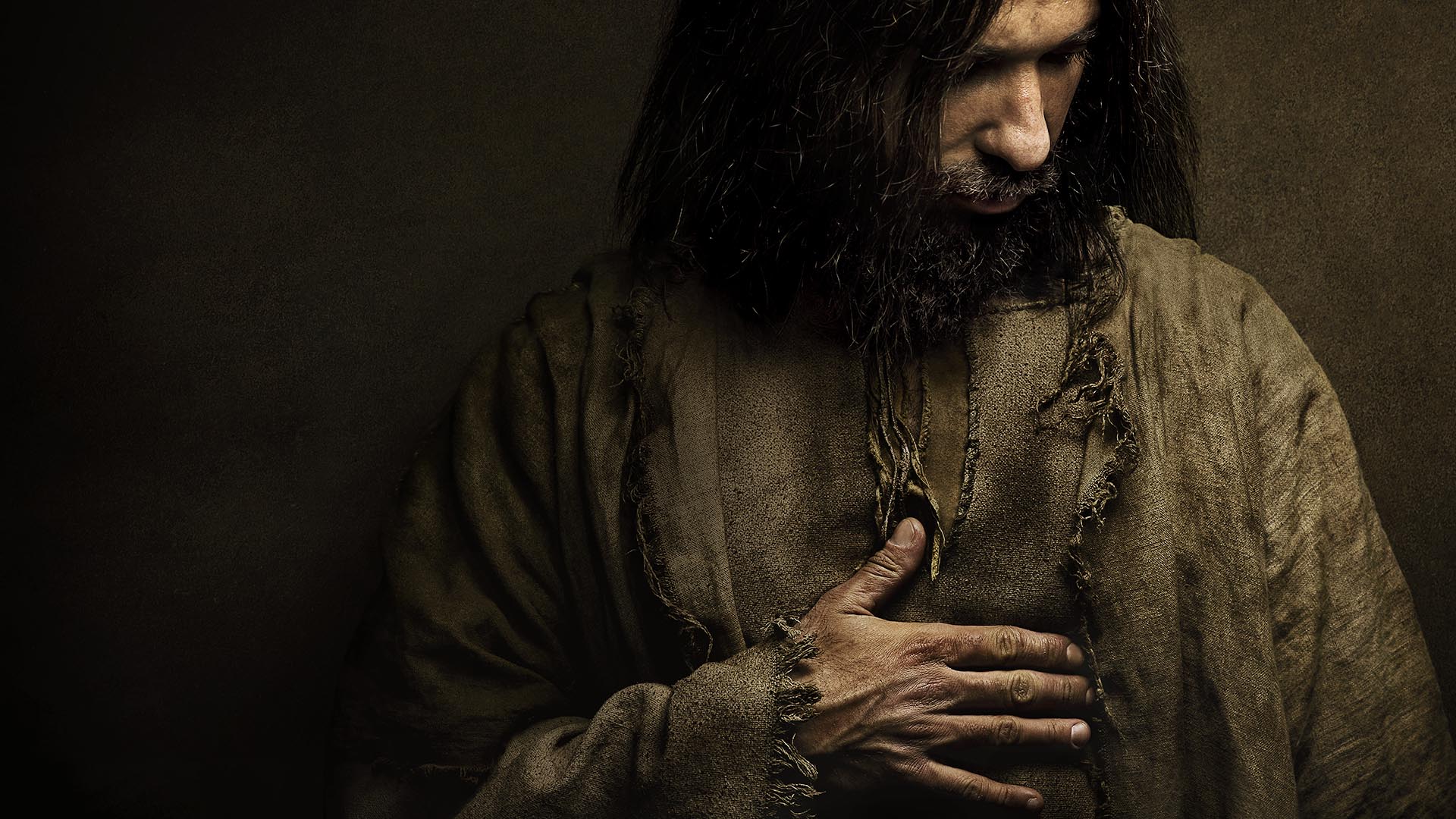
Copyright National Geographic

The following is reposted from JRGanymede.com

The Lovely One brought up the idea that Jacob getting the birthright from Isaac by deception was a type of us and Christ. We inherit all that our father hath by assuming our older brother’s identity just like Isaac. Of course what Jacob did was squirrelly and we were discussing whether even the unsavory could be types of Christ. So I brought up Laban. He is a type of Christ too, though wicked.

Bing! The light bulb went on.

What if we’ve missed the complete meaning of the Armor of God scripture this whole time?

Put on the whole armour of God, that ye may be able to stand against the wiles of the devil.

For we wrestle not against flesh and blood, but against principalities, against powers, against the rulers of the darkness of this world, against spiritual wickedness in high places.

Wherefore take unto you the whole armour of God, that ye may be able to withstand in the evil day, and having done all, to stand.

Ephesians 6:11-13.

We all know that the armor of God here is a metaphor for protection. What if it is also a metaphor for identity?

Full armor–“whole armor”–was a very effective means of disguise. Legendarily, the modern salute arose from knights lifting their visors so their commander could check [if it] was really them. Even ancient armor, complete with helm, mostly obscured the face. That is why Nephi wore Laban’s armor to get the plates. The armor protected him not by being strong by making him seem to be Laban.

The ancient world had many legends of men effectively pretending to be someone else by dressing in their armor. El Cid won his last battle, it is said, after he was dead. They put his armor on his corpse, strapped it to his horse, and the Moors fled from El Cid who they could not tell was dead under his armor.

Put on the whole armor of God. Take on God’s identity. Only in becoming God can you withstand the rulers of the darkness of this world.


oneClimbs Commentary

Another great post from G and inspired by the wisdom of the Lovely One. Seeing the armor taking on an identity instead of mere protection is such a fantastic concept. The apostle Paul seemed to like this idea and referred to in at least two verses that come to mind:

“For as many of you as have been baptized into Christ have put on Christ.” Galatians 3:27

“But put ye on the Lord Jesus Christ, and make not provision for the flesh, to fulfil the lusts thereof.” Romans 13:14

The ‘put on’ phrase here is a translation of the Greek word “enduo” which means “(in the sense of sinking into a garment); to invest with clothing.” Interesting to imagine clothing yourself with the Savior or putting on his identity. Latter-day Saints reflect this idea literally when they put on their temple garment daily and wear it under their regular clothes. In reference to the temple garment, Boyd. K Packer taught that it:

“…becomes a shield and a protection to the wearer. . . . For many Church members the garment has formed a barrier of protection when the wearer has been faced with temptation.” (Boyd K. Packer, The Holy Temple (Salt Lake City: Bookcraft, 1980), 75ff.)

This gets much more interesting when one considers the temple endowment and how taking on the identity of God opens the path to exaltation.

Junior Ganymede New Testament Temple Prep
Previous Article“But I thought…”
Next Article The LDS Church Parts Ways With the Boy Scouts of America
Steve Reed

I created oneClimbs as a place to organize my thoughts and share my observations with anyone who might find the information useful. Though I may speak passionately or convincingly in some of this content, PLEASE don't simply take my word alone on anything. Always seek the truth of all things through study and prayer in the name of Jesus Christ.

Leave A Reply Cancel Reply

New Post Email Notifications

You can subscribe any time, and I will ONLY use your email to send you new post updates.

POPULAR POSTS
  • Popular
  • Recent
Recent Comments
  • Sheralyn on Terryl Givens – An Approach to Thoughtful, Honest and Faithful Mormonism: “Love this page and your response- I agree!”
  • Jane on Analysis of an Incredible Eve/Mary Artwork by a Roman Catholic Nun: “This picture of Eve and Holy Mary captures my need to confess my sins and feel Mary with her strength…”
  • Ken Baker on The Meaning of Isaiah 4:1 and Seven Women Taking Hold of One Man: “What God is holding out in His wonderful gladtidings is a new head for man, (Romans 5, the one man…”
  • Steve Reed on Vertical and Horizontal Sin: The Hebrew Key to Wickedness and Abominations: “God used all kinds of people, many of whom had shady or what we might call dysfunctional pasts. That should…”
  • Dod on Vertical and Horizontal Sin: The Hebrew Key to Wickedness and Abominations: “Except…God used polygamist men, not because he was ignoring polygamy, but because he saw those men as men after His…”
Blogroll
  • A Traditional Architecture Glossary
  • Academy for Temple Studies
  • Book of Mormon Onomasticon
  • Bruce Charlton's Notions
  • Historical Monogamy
  • Interpreter Foundation
  • Isaiah Explained
  • Isaiah Explorer
  • Isaiah Institute
  • Isaiah Prophecy
  • Junior Ganymede
  • Latter-day Saint Architecture Blog
  • Latter-day Saint Temples
  • LDSSymbols.com
  • Leading Saints
  • Number in Scripture by E. W. Bullinger
  • Search tool for the Bible
  • Search tool for the Book of Mormon
  • Strongs Concordance
  • TempleStudy
  • The Ancient Context of Joseph Smith's Egyptian Alphabet and Grammar
  • Webster's 1828 Dictionary
New Post Email Notifications

You can subscribe any time, and I will ONLY use your email to send you new post updates.

About this Site

I created oneClimbs as a place to organize my thoughts and share my observations with anyone who might find the information useful. All content on this site is considered a work in progress that is often updated when new insights are obtained.

Climbspiration

“No wonder the selfish individual is often willing to break a covenant in order to fix an appetite.” – Neal A. Maxwell

oneClimbs.com
  • Home
  • All Posts
  • About oneClimbs
  • Contact

LecturesOnFaith.com  //  LDSSymbols.com

© 2025 oneClimbs. All content unique to oneClimbs is fair use. All other content is property of the respective copyright owner. oneClimbs.com is not owned, controlled, or affiliated with The Church of Jesus Christ of Latter-day Saints. All views and opinions are of the authors here who are solely responsible for their content and should not be interpreted as official statements of Church doctrine, belief, or practice, unless specifically stated and correctly referenced.

Type above and press Enter to search. Press Esc to cancel.