

Latter‑day Saints speak often of baptism, the gift of the Holy Ghost, priesthood ordination, and temple anointings, but we rarely use the old Christian word chrism.
From the second and third centuries onward, however, many Christians described initiation into Christ’s church in terms of an anointing with consecrated oil, or chrism, that sealed believers with the Holy Spirit and marked them as the Lord’s own.
I’d like to explore how early Christian chrism was closely tied to baptism, the gift of the Holy Spirit, and covenantal identity, and that these themes resonate deeply with Latter‑day Saint doctrine and practice.
Scriptural foundations: anointing and the Spirit
The New Testament presents Jesus as the One “anointed” by God; the very title “Christ” means “Anointed One.” Peter summarizes the Lord’s ministry this way:
“God anointed Jesus of Nazareth with the Holy Ghost and with power”
Acts 10:38
Early Christians understood that to become true disciples of Christ meant, in some sense, to share in His anointing.
Alongside this idea runs a consistent New Testament pattern: faith, repentance, baptism in water, and then the gift of the Holy Ghost (e.g., Acts 2:38; Acts 8:14–17; 19:1–6).
These passages distinguish water baptism from the Spirit’s coming through apostolic ministration, suggesting a two‑stage rite of initiation: first water, then Spirit.
Latter‑day Saint scripture preserves this same structure in 2 Nephi 31, Moroni 2–3, and Doctrine and Covenants 20 and 33, where baptism is followed by “baptism of fire and of the Holy Ghost” conferred by the laying on of hands.
Although our texts do not normally use the word chrism, the pattern of water, Spirit, and covenant identity prepares us to recognize similar structures in the earliest Christian sources. (more here)
Early Christians as “anointed ones”
An early witness to the link between “Christian” and anointing is Theophilus of Antioch (late second century), who derives the name “Christian” from the Greek chrisma (“anointing”), arguing that believers bear this name because they have been spiritually anointed through Christ. (source)
For him, the term “Christian” is not merely a label but reflects participation in the Anointed One’s own anointing by the Spirit.
This theme aligns naturally with the teaching that covenant disciples are, in a real sense, “anointed ones” under the great Anointed One.
Priesthood ordination confers divine authority, and temple ordinances include sacred anointings that prepare men and women to become kings and priests, queens and priestesses, unto God.
In both ancient and modern settings, anointing marks out a people whom God has chosen, empowered, and set apart.
Chrism after baptism: Tertullian and the Apostolic Tradition
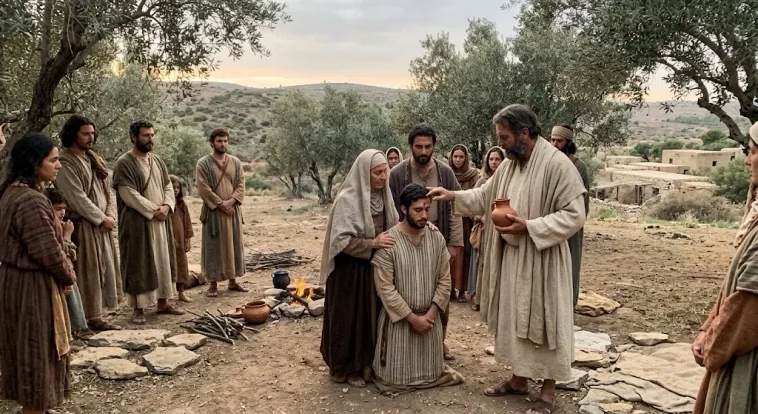
By the early third century, Christian writers describe a developed pattern in which anointing with oil immediately follows baptism.
Tertullian’s treatise De Baptismo (On Baptism), (source) explains that after candidates come up from the baptismal waters they are anointed with consecrated oil, and then hands are laid on them with prayer for the Holy Spirit.
Around the same time, a church order often associated with Hippolytus of Rome, the Apostolic Tradition, gives a detailed description of baptismal rites. (source) Catechumens are first anointed with “the oil of exorcism” (p.34) as preparation, then baptized in water, and afterward anointed again with a perfumed “oil of thanksgiving.” The bishop then lays hands on each newly baptized person, praying for the descent of the Holy Spirit and saying: “I anoint thee with holy oil in God the Father Almighty and Christ Jesus and the Holy Ghost. And sealing him on the forehead, he shall give him the kiss [of peace] and say: The Lord be with you.” (p.39) sealing each on the forehead. Here, anointing, sealing, and the gift of the Spirit are woven tightly together.
The overall picture is clear: faith and repentance lead to baptism in water; baptism is immediately followed by anointing with chrism and the laying on of hands; through these actions, the Holy Spirit is given and the Christian is sealed as God’s own.
This sequence closely parallels the Latter‑day Saint pattern of baptism and confirmation by the laying on of hands for the gift of the Holy Ghost, even though our current practice does not ordinarily include a separate post‑baptismal chrism.
Laying on of hands, authority, and the Spirit
A generation after Tertullian, Cyprian of Carthage writes during controversies over baptisms performed by schismatic and heretical groups.
Cyprian insists that the Holy Ghost is given through legitimate ministers by means of the laying on of hands and associated anointing, treating water baptism and the reception of the Spirit as related yet distinct acts. He argues that those baptized outside the Church must still be properly “sealed” with the Spirit under authorized episcopal hands. (source)
Several themes in Cyprian’s writings resonate with things that would be familiar to Latter-day Saints. He assumes that valid ordinances require proper authority and that the gift of the Holy Ghost is not automatically attached to any act of immersion.
He treats the post‑baptismal imparting of the Spirit as a discrete ordinance, often associated with anointing and sealing, and he sees this sealing as essential to full membership in the body of Christ.
Latter‑day Saints likewise distinguish between baptism by immersion and confirmation for the gift of the Holy Ghost, and we teach that both must be performed by those holding valid authority.
A visible sign of grace
One of the most detailed ancient descriptions of chrism comes from the fourth century catechetical and mystagogical lectures attributed to Cyril of Jerusalem.
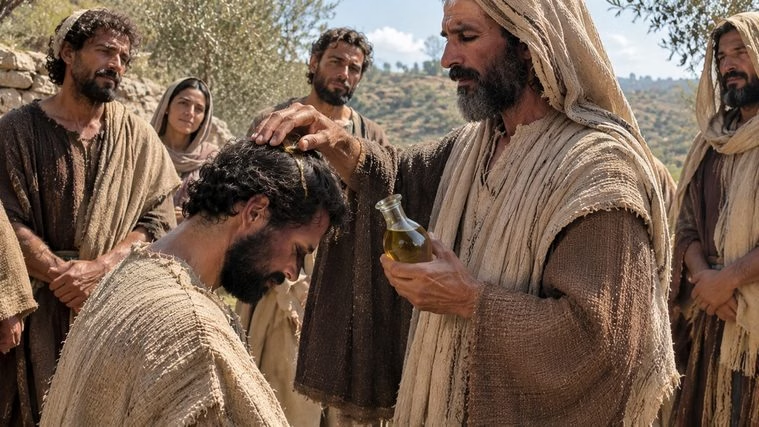
In the Mystagogical Catecheses that follow Easter, Cyril explains to the newly baptized what they have received, including baptism, anointing, and the Eucharist. In the catechesis “On the Chrism,” he describes how, after coming up from the baptismal waters, the newly baptized are anointed with consecrated oil on the forehead and on the other senses and insists that this is not “mere ointment” but a grace bearing gift of Christ through the Holy Spirit. (source)
For Cyril, the material oil is a visible sign of the grace of the Holy Spirit: although the oil touches the body, it is the soul that he says is truly anointed. He teaches that through this anointing believers become ‘anointed ones,’ sharing in Christ’s own anointing, and he links the anointing with divine protection, the sanctification of the senses, and empowerment to live a new life.
The oil therefore marks Christians as belonging to Christ in much the same way that Old Testament anointings marked priests and kings as belonging to God.
Latter day Saint scripture uses stronger “sealing” language for similar covenant realities, speaking of being “sealed up unto eternal life,” of having Christ’s name written in the forehead, and of ordinances that constitute “an everlasting covenant” between God and His people.
In the temple, sacred anointings prepare participants to receive priestly and kingly blessings, and modern revelation describes the Holy Spirit of promise as the divine Sealer who ratifies covenants and promises.
Theological themes: anointing, identity, and transformation
When these early Christian sources are set side by side, several recurring themes emerge.
First, chrism is closely associated with identity. To be anointed is to be recognized as a Christian, to bear Christ’s name, and to belong to Him. Theophilus’s derivation of Christian from chrisma, Cyril’s focus on the forehead as the place of anointing all underscore that anointing is a sign of ownership and covenant membership.
Second, chrism is linked with the gift of the Holy Spirit. Tertullian, the Apostolic Tradition, Cyprian, and Cyril all relate post‑baptismal anointing to the Spirit’s descent and indwelling. The oil symbolizes the Spirit’s presence, but it is also part of a rite in which the Spirit is actually invoked and conferred. This reinforces New Testament patterns in which baptism in water is followed by reception of the Holy Ghost through apostolic ministration.
Third, chrism implies priestly and royal vocation. By echoing Old Testament anointings of priests, prophets, and kings, early Christian writers teach that all the baptized are called to participate in Christ’s priestly and kingly ministry. Anointing is not merely about cleansing; it is about consecration and empowerment for service.
Each of these themes are well-known in Latter‑day Saint doctrine today.
Baptism and confirmation give us the name of Christ, enroll us in His church, and promise sanctification through the Holy Ghost. Priesthood ordination and temple anointings further designate us as priests and priestesses, kings and queens, with specific stewardships and promised blessings.
Modern revelation portrays the Holy Spirit of promise as the agent who seals covenant‑keepers up unto eternal life and confirms upon them all the blessings God has promised.
Restoration perspectives and continuities
For Latter‑day Saints, the ancient practice of chrism offers several important insights.
First, chrism demonstrates that very early Christians recognized a distinction between baptism in water and the reception of the Spirit through authorized ministration.
The pattern of baptism, anointing, and laying on of hands outlined in pre‑Nicene and early post‑Nicene sources closely parallels the Restoration’s emphasis on baptism followed by confirmation for the gift of the Holy Ghost.
Second, the anointing and sealing language used in these texts shows that early Christians understood initiation as covenantal and transformative.
Chrism marked them as God’s own, sealed their covenants, and empowered them to live as Christ’s disciples. Latter‑day Saint teachings about being sealed by the Holy Spirit of promise, about having Christ’s name written on us, and about being anointed to a priestly and kingly role sit comfortably within this ancient Christian horizon.
Third, the Restoration restores not only ancient forms but also ancient meanings.
While our current baptismal liturgy does not include a separate post‑baptismal anointing with oil, Latter‑day Saints retain anointing in other ordinances: healing blessings, priesthood ordination, and temple rites.
Reading early Christian chrism in light of these Restoration practices can deepen LDS appreciation for how the Lord uses material elements, like water and oil, as vehicles for spiritual rebirth and consecration.
Finally, these convergences invite a sense of continuity rather than discontinuity.
Latter‑day Saints do not claim to reproduce every historical detail of early Christian liturgy, but we do claim that the same Christ who organized the Church in the meridian of time has restored His authority and ordinances in the latter days.
The witness of early Christian chrism suggests that from the beginning, disciples understood themselves as anointed, sealed, and Spirit‑filled members of a covenant community.
In that sense, modern Saints who covenant at baptism, receive the gift of the Holy Ghost, and participate in priesthood and temple anointings stand in recognizable fellowship with those early Christians who spoke so reverently of the holy chrism.
